
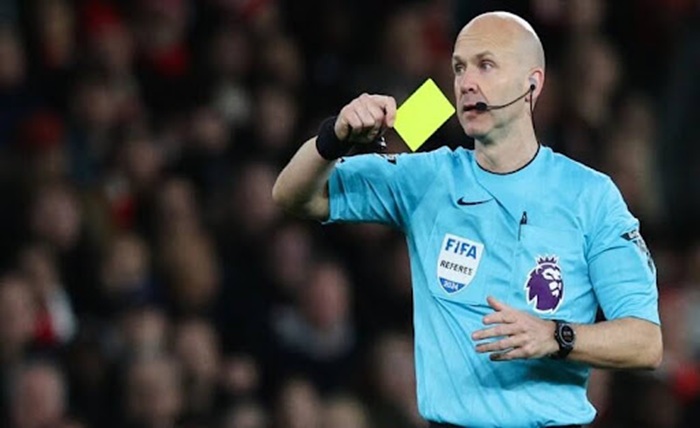
What is a yellow card in football is a question that people who are new to the world’s most popular sport often ask. During a match, you have probably seen the referee show a yellow card to a player after a foul or an action that violates the rules.
The yellow card is a familiar part of football and plays an important role in maintaining order and discipline on the pitch. A player who receives a yellow card can continue playing, but if they commit another offense and receive a second yellow card, they may have to leave the pitch.
So, what is a yellow card in football? In what situations can a player receive a yellow card? Does receiving two yellow cards in the same match result in a dismissal? Let’s explore this with Xôi Lạc 365 in the article below!
What is a yellow card in football?
A yellow card is a form of caution used by the referee against players, and it can also apply to members of the coaching staff when they violate the rules of the match.
When the referee shows a yellow card, it means that the person receiving it has been officially cautioned.
However, a yellow card does not mean that the player must immediately leave the pitch. The cautioned player can continue participating in the match.
This is the key difference between a yellow card and a red card.
Yellow cards are used to help referees control the match and limit dangerous fouls or unsporting behavior.
What does a yellow card mean in football?
Situations in which players can receive a yellow card under the laws of the game
According to Xoi Lac TV, under the laws of football, referees can show yellow cards in many different situations.
Common offenses that can result in a yellow card include:
- Committing a foul in an unsporting manner.
- Verbally or physically protesting a referee’s decision.
- Deliberately wasting time or delaying the restart of play.
- Failing to respect the required distance during a set piece.
- Repeatedly committing fouls.
- Engaging in unsporting behavior.
- Entering or leaving the pitch without the referee’s permission.
- Celebrating a goal in a way that violates the rules.
Depending on the severity and nature of the incident, the referee will make the appropriate decision.
Yellow cards for fouls during play
One of the most common reasons players receive yellow cards in football is committing a foul.
However, not every foul results in a yellow card.
If a player makes a dangerous challenge, stops a promising attack, or behaves in a way considered unsporting, the referee may show a yellow card.
This helps limit overly aggressive challenges and protect players on the pitch.
A player receives a yellow card for a foul during play
Yellow cards for reacting to or arguing with the referee
Football is an extremely competitive sport. As a result, players sometimes react to refereeing decisions.
However, if a player uses actions or words to express excessive dissent, the referee may issue a yellow card.
Actions such as surrounding the referee, reacting aggressively, or deliberately showing disagreement with a decision may be punished.
This is intended to maintain respect for the referee and ensure that the match is played in an orderly manner.
Can more than one yellow card result in a direct red card?
The answer from Xôi Lạc TV for readers is: Yes.
This is one of the most important rules fans should know when learning what a yellow card in football is.
If a player has already received one yellow card and then commits another offense that warrants a yellow card in the same match, the referee will show a second yellow card followed by a red card.
That player must leave the pitch and cannot continue playing.
The player’s team must also continue with fewer players for the remainder of the match.
Therefore, a player who has already received a yellow card generally needs to play more cautiously to avoid receiving another disciplinary sanction.
Do multiple yellow cards count as a red card?
Does a yellow card carry over to the next match?
This depends on the regulations of each competition. If you regularly watch football through link xem trực tiếp bóng đá, you will probably be familiar with this.
In many competitions, a player’s yellow cards can accumulate across multiple matches. Once a certain threshold is reached, the player may receive a suspension.
For example, a player who receives several yellow cards across different rounds may have to miss one match according to the competition’s regulations.
However, the calculation method and the number of cards required for a suspension are not the same in every competition.
Therefore, when following a specific competition, you should check its official regulations to understand the exact rules.
How does a yellow card affect a team?
A yellow card does not only affect the individual player but can also influence the team’s tactics.
When a defender receives an early yellow card, they often have to limit strong challenges to avoid the risk of receiving another punishment.
This can unintentionally create dangerous spaces for the opposition to exploit.
Similarly, a midfielder who has received a yellow card may be less willing to press aggressively as usual.
Therefore, a yellow card can sometimes have a significant impact on the flow of a match even though the player is still allowed to remain on the pitch. When you watch livescore truc tuyen during intense football matches, you can see the impact of such a card.
Conclusion
Yellow cards can be shown in many situations, including fouls, time-wasting, dissent toward the referee, unsporting behavior, or failure to follow the rules on the pitch. It can be said that the yellow card is an indispensable part of modern football. It helps referees maintain discipline, limit dangerous behavior, and contribute to a fair and orderly match.
Hopefully, through the article above, you now have a clearer understanding of what a yellow card in football is as well as the situations in which players may be cautioned by the referee. This is certainly basic knowledge that every football fan should know.